Archive for the ‘Family favorites’ Category


A Seasonal Change


chef as a child
Already a chef


Changing eating habits can be quite a task.  In the wake of the last few years’ surge in popularity of so-called comfort foods, I had developed a real taste for such calorie splurges as buttermilk fried chicken, braised pork belly and the infamous maple bacon scones from fellow blogger @gas*tron*o*my.  Having cooked my way through several Thomas Keller tomes, and sampled the favorites of @The Pioneer Woman Cooks, I had rapidly begun to run out of available wardrobe options.  My ever expanding waistline was also hormonally attenuated, compounded by three years sitting in a home office and behind the wheel of my truck.

 After a recent review of the New York Times coverage of the Fall 2010 couture collections, and calculating the replacement value of my existing wardrobe of beautiful “investment” clothing, albeit several sizes too small, I made the decision to stop this freight train of middle-age spread.  I engaged the services of a local personal trainer and was promptly faced with not only increasing my levels of regular physical exercise, but taking a good hard look at what I was eating and drinking.  The old calorie swap of wine for dinner, so effective in my twenties, was no longer a viable option.  At 36% body fat, I had to make some tough choices, or face far more serious consequences than wardrobe malfunctions.

I had kept a food journal about a year earlier, during a half-hearted attempt to discover a magic solution to my increasing weight.  As a result, I had reduced wine intake from four large glasses on a typical evening to two, and eliminate snacking on sunflower seeds. (One smallish bag turned out to contain over 1750 calories and an unimaginable amount of sodium; who knew?)  However, I had failed to note that my regular menus had increasingly been made up of fried or fatty meats, large bowls of creamy risotto, buttery pasta or sesame oil laden noodles and an occasional artichoke consumed with loads of melted butter.  Though I love locally grown fresh vegetables, I rarely took the time to prepare them, grabbing meals on the run without a thought to nutritional balance.  I had even begun to consider popcorn a meal option; a reasonable alternative for a college student perhaps, but not as a regular dinner choice.

 The new “meal plan” (I refused to call it a diet) required that I eat 5-6 small meals per day, with a specific ratio of protein, fruits and vegetables.  In addition, I was required to log each and every item I put in my mouth, including the date, time, quantity, meal type, how hungry I was when I ate, and where the meal was eaten.  Wine was essentially off the table, with the possibility of a single glass being substituted for a serving of fruit every ten days or so.  Dutifully, I made the grocery lists, and filled my refrigerator with the items on the “allowed” list.  The first few days were literally painful; my seemingly pitiful servings of fruit and lean protein left me hungry within minutes of finishing.  I would awaken in the middle of the night craving popcorn.  I found myself lusting after my husband’s morning toast.  I had no idea that my body was literally addicted to simple carbohydrates.  Not being a fan of prepared foods or junk food, I though I was immune to this typical American condition.  However, I was as strung out as any MacDonalds or Starbucks junkie.  The only difference is that I binged on “foodie” indulgences.

 After about a week, most of the major cravings stopped, and I began to be satisfied, even full after consuming my allotted ration.  Amazingly, I hardly missed the wine, but rather anticipated the point in the meal plan in which I could begin to phase grains back into my daily routine.  After week three, I had lost ten full pounds, and three percentage points of body fat.  All of a sudden, I was able to start seeing visible results in addition to the twice-weekly weigh-ins on the magical digital scale.  I was able to literally slide into my dressy jeans rather than having to exhale deeply to even zip them up.  The prospect of fitting back into my closet full of clothes began to seep into my consciousness.

 From the food side, I began to enjoy some of the regular items from the meal plan.  I lingered for almost twenty minutes over a 7 ounce container of plain 2% Greek yoghurt, accompanied by a tablespoon of freshly ground organic peanut butter.  For my birthday dinner, I prepared ground chicken Chinese lettuce wraps, without the fried noodle garnish, of course.  I actually began to crave roasted baby asparagus, eating the spears right off the sheet pan, hot out of the oven.  When the time finally came where I could begin to integrate grains again, though only in those meals immediately following exercise, I found myself uninterested in my prior heaping portions.  One slice of multi-grain rustic bread toasted and placed in the bottom of my soup bowl was positively sublime.  Coarse bulghur, mixed with parsley, mint, green onions and chickpeas and marinated in fresh lemon juice and our local olive oil, and scooped on romaine leaves rather than pita bread was a celebration of taste and texture.  Instead of country potatoes, I enjoyed sautéed sweet onions, mushrooms and yellow chard with my bacon and egg breakfasts.

 Do I still crave those “forbidden” comfort foods?  Absolutely!  For one (post workout) dinner, I prepared boneless, skinless chicken tenderloins marinated in buttermilk and Crystal hot sauce, breaded with seasoned flour and quickly seared in peanut oil, then carefully drained and finished in the oven.  It tasted like fried chicken to me and, instead of four or five, I was satisfied with two, yes two, accompanied by a whole pile of crisp roasted baby asparagus.  The prior weekend, I reveled in slowly braised beef short ribs with a fabulous reduction of red wine and vegetables.  My husband ate it over buttermilk smashed potatoes, but I enjoyed in with just the carrots, celery and onion cooked with the meat and a pile of pan-seared baby Brussels sprouts.

 As a chef, I take pride in the fact that I can juggle flavors and textures successfully in almost any dish.  This new way of eating has challenged me to recreate familiar flavor profiles with different ingredients and methods of preparation.  Instead of smearing homemade romesco sauce on thick slices of toasted rustic bread, I used slices of crisp organic cucumber.  Replacing the ubiquitous (and high-fructose corn syrup laden) whole grain toaster waffles for breakfast was a smoothie made with papaya nectar, 2% milk, almond butter, toasted golden flax meal and frozen wild blueberries.  In return, I can snack on such seeming forbidden treats as cheese, whole roasted almonds, and yes, sunflower seeds (unsalted and in measured quantities).  Bacon was never forbidden and whole farm fresh eggs provide a regular source of protein.  This meal plan allows 30% of my daily caloric intake to come from fats (both in foods and for cooking, one third each from animal sources, olive or nut oils or fish).  A glass of wine is now a delightful adjunct to a meal, and I comfort myself regularly with a single square of rich, dark, unsweetened Scharffenberger chocolate for dessert.

 After four weeks, I began to sense that some of my old habits had been broken, or at least replaced with new ones.  The meal plan continues to evolve, but now basically consists of the 5-6 small meals a day, pairing at least one protein and one fruit or vegetable in each meal.  My sleep has improved, hot flashes have all but disappeared, and I have more energy and fewer lapses into lethargic inaction.  I know that this is only the beginning of longer term change, but I am encouraged.  I can still be a “real” chef.  I can still prepare stunning and decadent meals for myself, my clients and my loved ones, but I now realize that I have choices.  I can eat reasonable portions of just about whatever I want and still be fit and healthy. 


Post by Julia Conway on April 13th, 2010

Putting Up Applesauce


The magical apple machine


One of my favorite fall chores is to take a box of our beautiful Mendocino Gravenstein apples and turn them into jars of applesauce. The Gravenstein is not a good keeping apple, and loses its crisp texture and incredible balance of sweet and tart flavors within a week or so of picking, even when stored under the best conditions. We get these apples here for about 4-6 weeks in mid August through late September, and while we eat as many as we can practically consume in that time period, I find myself craving the flavor in the darker months of winter when the only fruit on the store shelves are citrus and jet-setting bananas.
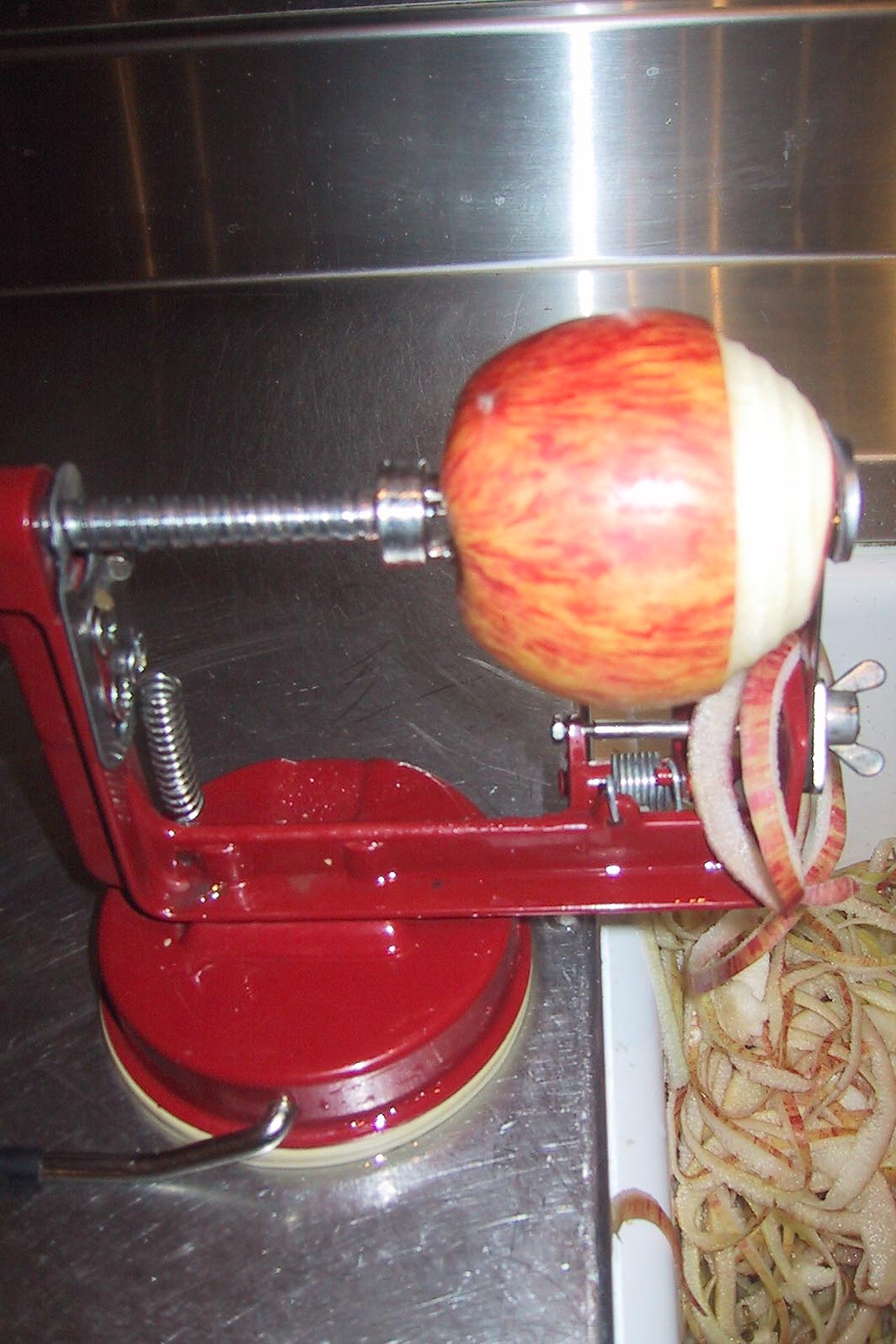
 
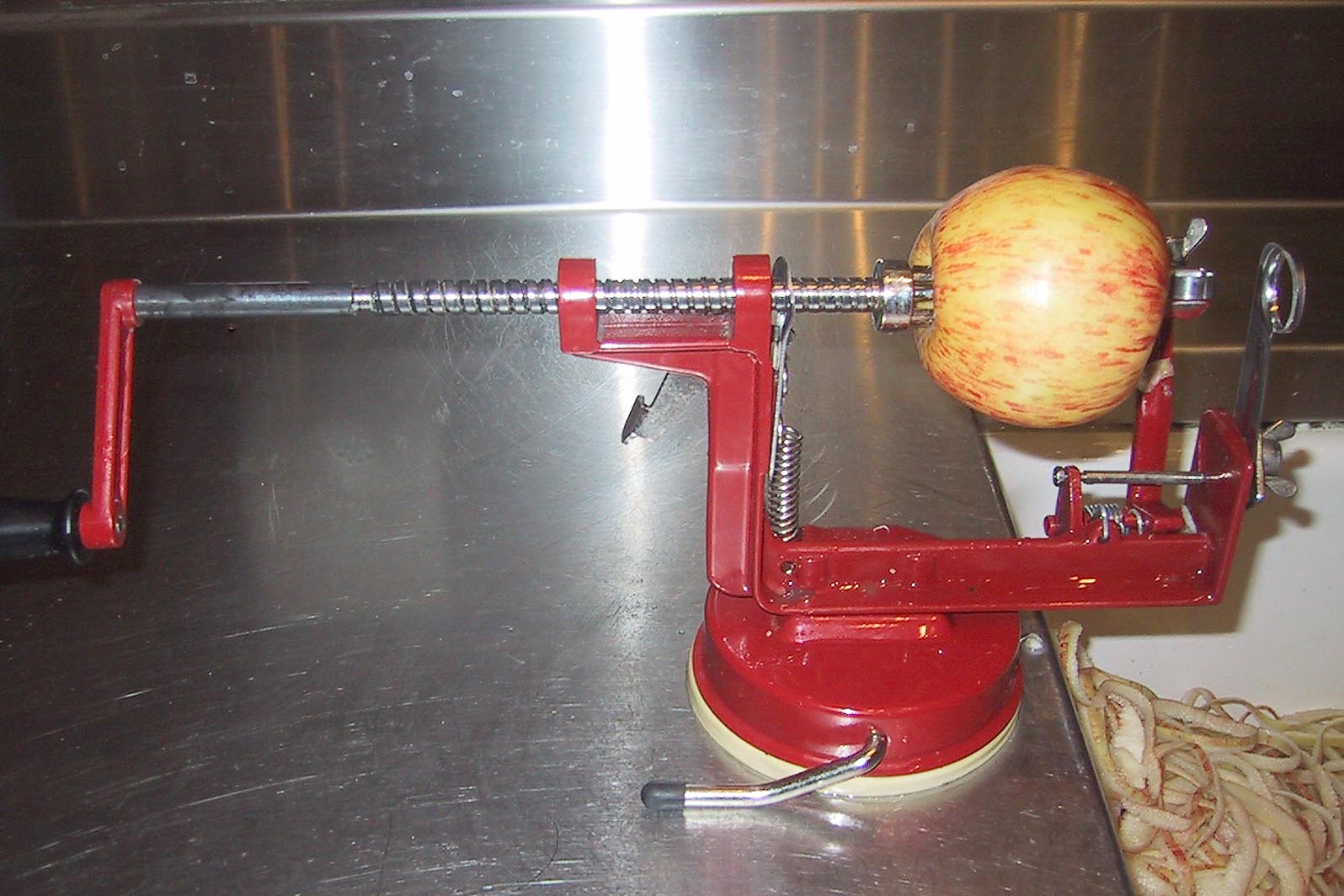
Peeling the apple 
 
One of the fun parts of making applesauce, aside from the tasting, of course, is using the apple peeling machine. This device resembles one of the pieces from the children’s game “Mousetrap,” and appears virtually unchanged from its original version, with the exception of the suction mechanism that allows me to mount it on the stainless steel countertop next to the sink. After setting the various blades and springs, an apple is speared, through the stem end, on the prongs. Turning the crank rotates the apple against the peeling blade while pushing the entire fruit through the coring and cutting blades. At the end of the process, you are left with spiral sliced fruit, a neat core containing stem and seeds, and yards of thin peels resembling a Halloween wig.
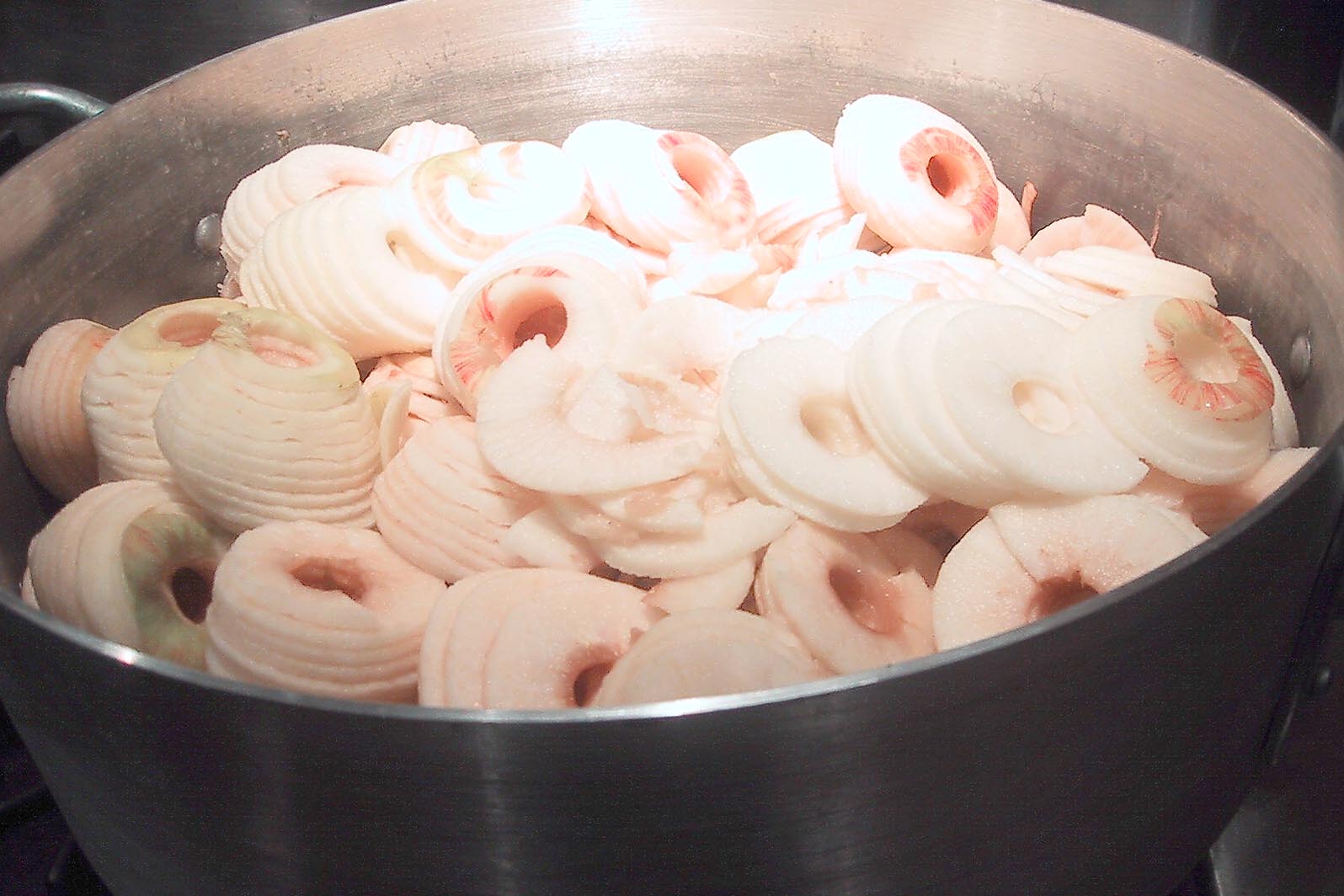
 
Apples in the kettle
 
After processing the entire box, the large kettle is full of the sliced apples, and I add several cups of water, some lemon juice to balance the sweetness, and whole nutmegs and stick cinnamon for flavor. The kettle is set over medium heat and stirred frequently to keep the fruit from sticking. The process of reducing the fruit to sauce consistency takes several hours, and the entire kitchen begins to smell reminiscent of apple pie. The only downside is that the open kettle occasionally spits small pieces of fruit in all directions, coating the backsplash and stovetop with sticky bits. 
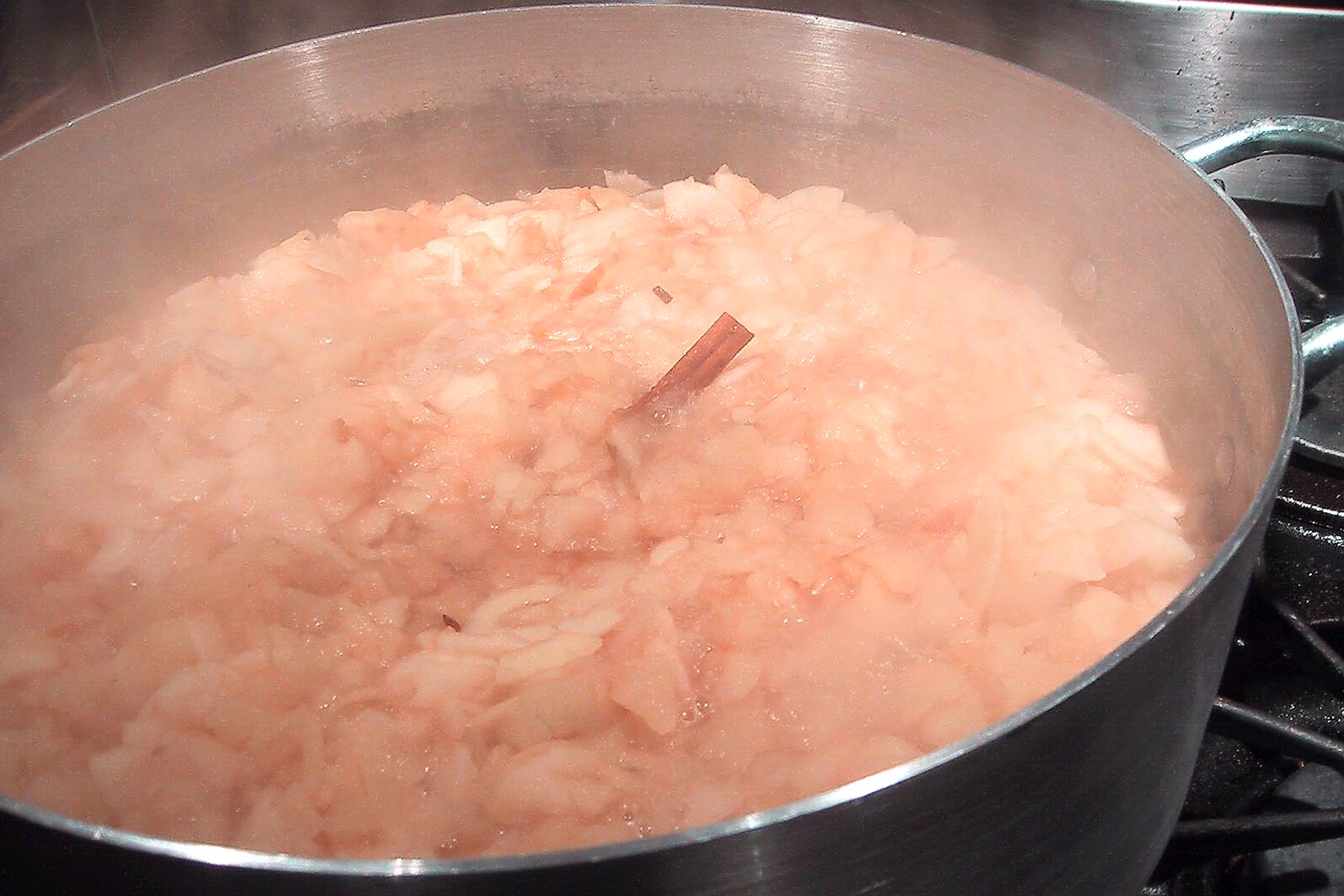
 
Cooking down the sauce
 
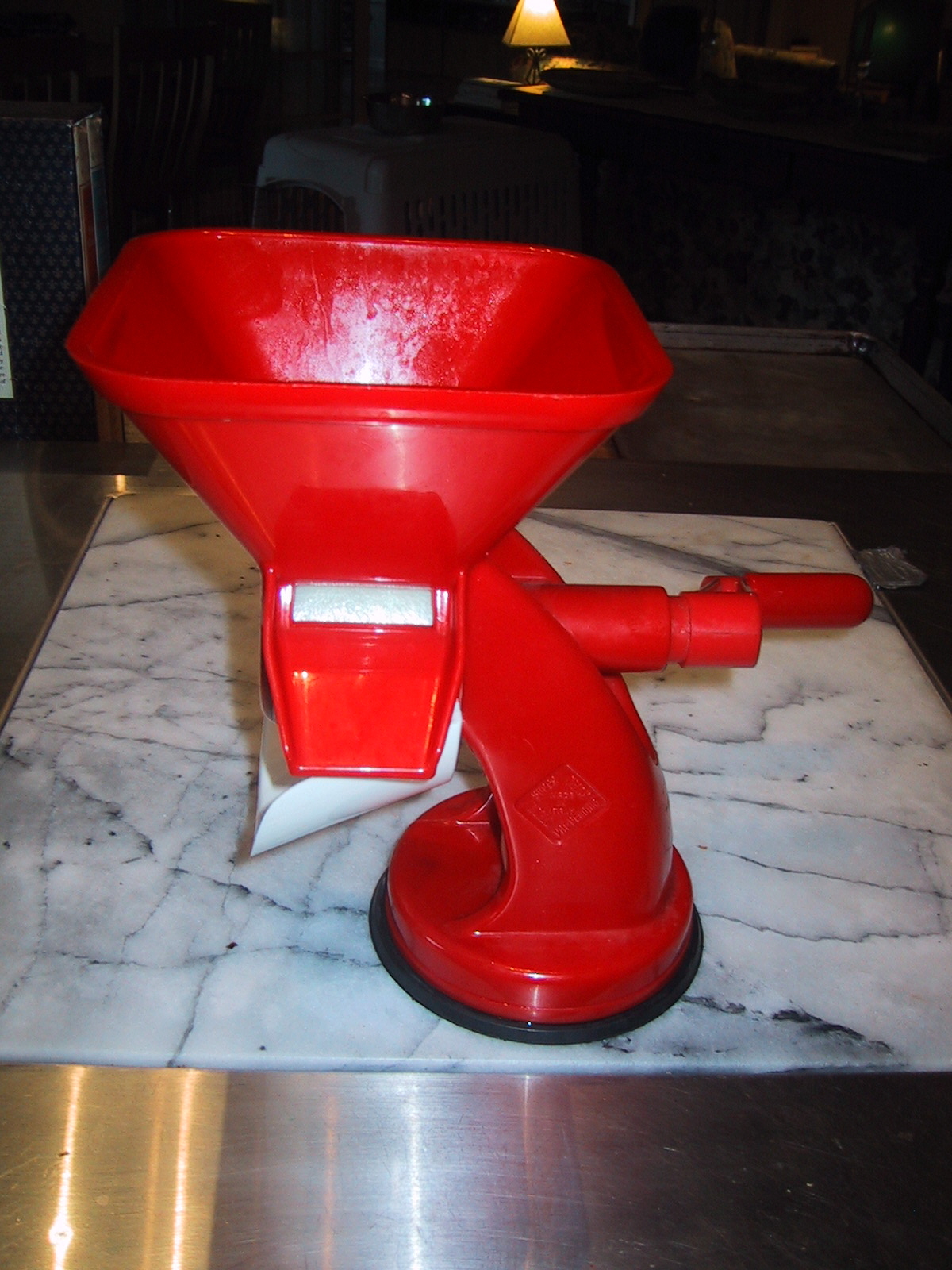
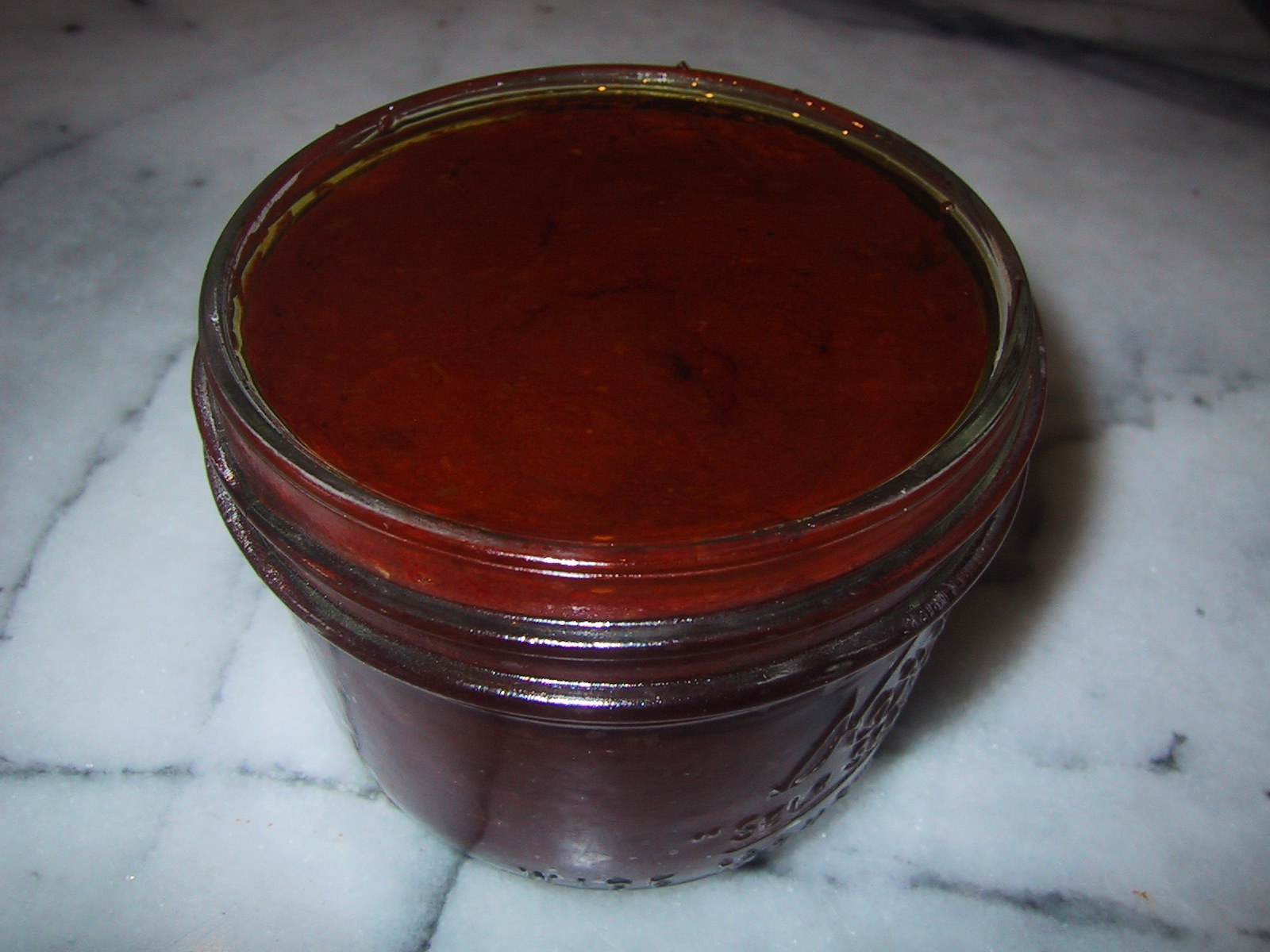
When the fruit is cooked down, the entire mash is run through the same mill I use for making tomato sauce, removing any remaining skin, seeds or fibrous pulp. The smooth puree is transferred into the smaller kettle, and the rest is added to the cores and skins in the compost bin. The sauce is reheated to reduce and thicken, and tasted for last minute additions of either sugar or lemon. With Gravenstein apples, this is rarely needed, as they seem to have been bred to make the perfect applesauce.
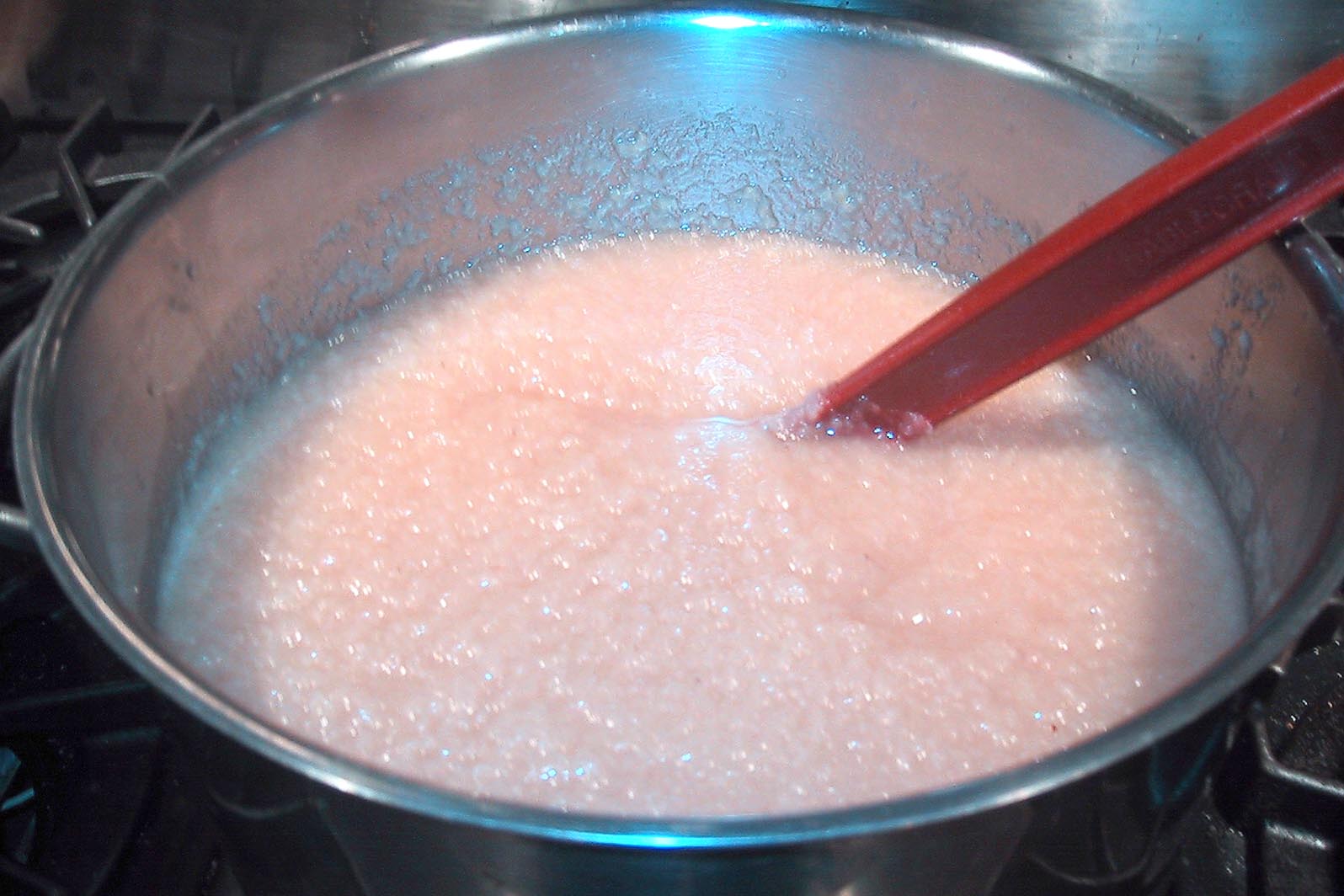
 
Pot of finished sauce
 
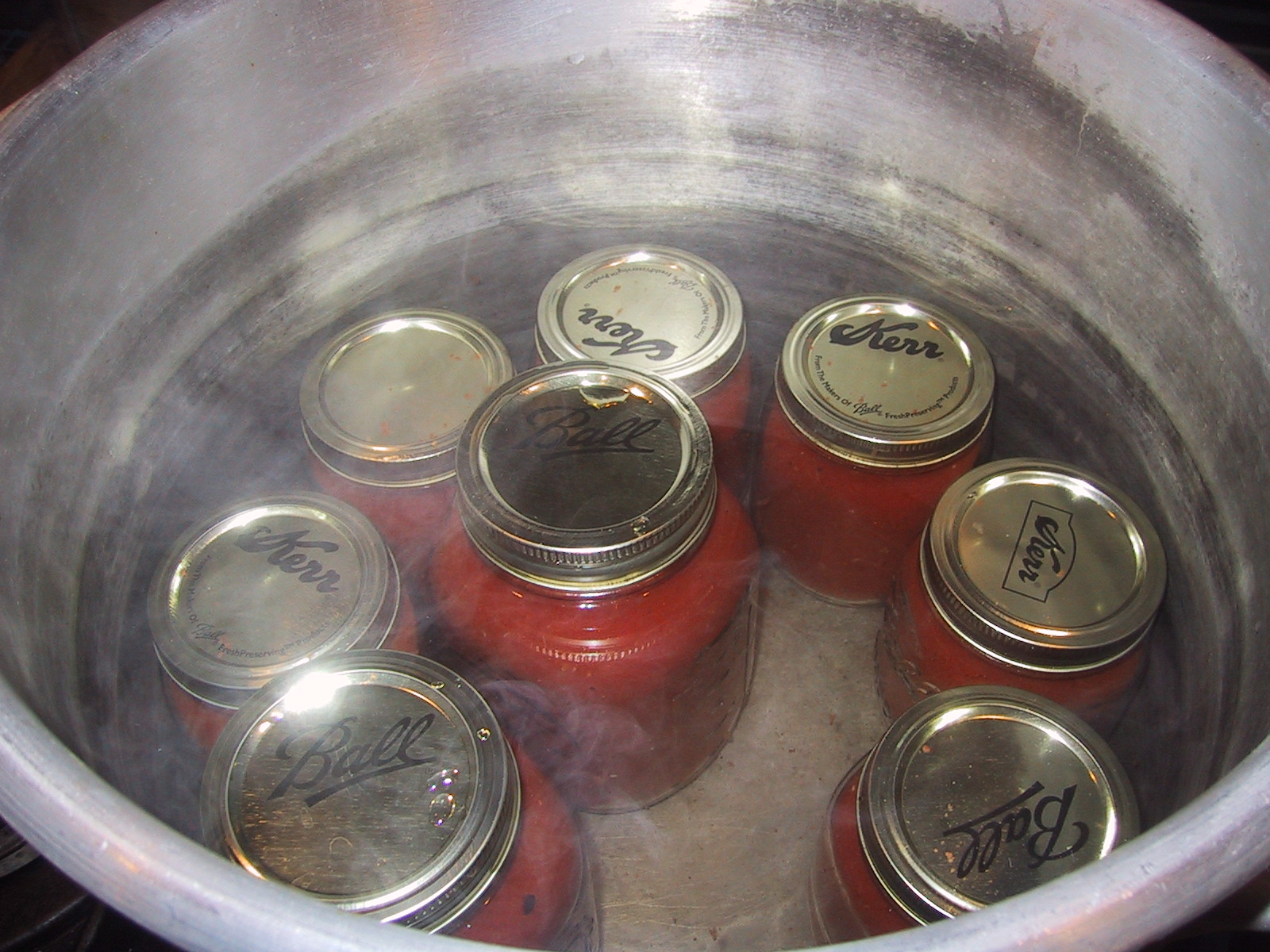
The canning process is routine by this time; the same steps using in canning the tomato sauce. Care must be taken not to drip the lava-like sauce onto arms or hands while filling the hot jars. A Chinese chef once taught me to coat my hands and forearms with cooking oil before stir-frying in a hot wok; the theory being that the oil would prevent food splashes from sticking to the skin and causing serious burns. I have found that this is also very effective with canning fruit products, and leaves my hands soft as an added bonus.
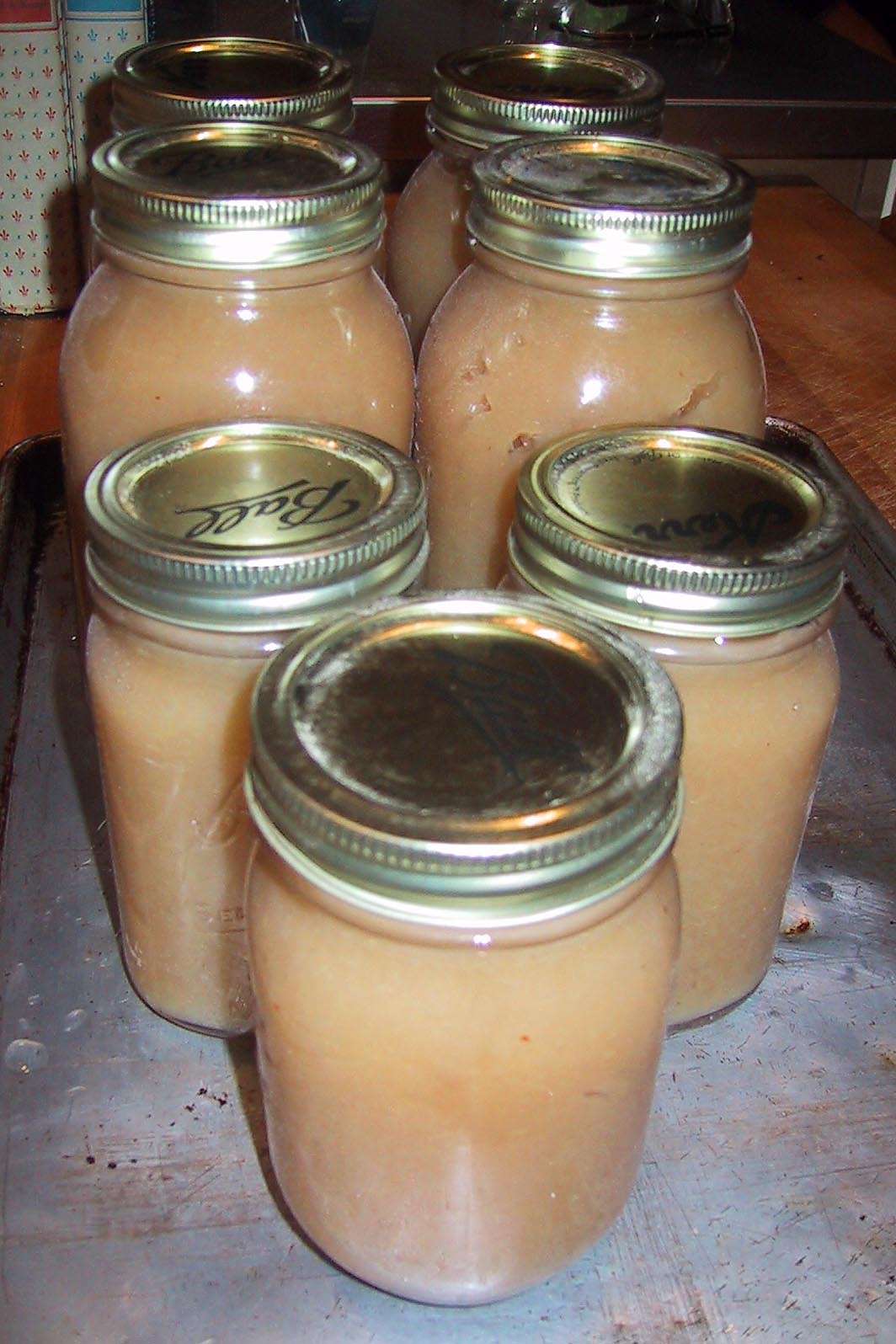
 
Finished jars of sauce
 
At the end of the day, I settle on the couch with a glass of wine, hearing the soft ping of the jars sealing, one after another, as the contents cool. Another seasonal ritual enjoyed, another apple harvest completed, and another year of living in this beautiful and abundant place.
Post by Julia Conway on October 22nd, 2009